Democrats win both chambers of Congress and AI stocks slump, with the S&P 500 down 4.4% in a single day; hopes of a US-Iran de-escalation send Brent down about 13% on the week, and the Bank of England raises rates for the first time in more than three years
09-11-2026 10:00
US midterm results showed Democrats taking control of both the Senate and the House, and concerns that data center construction could be restricted triggered a global sell-off in AI and chip stocks on November 5. The S&P 500 fell 4.4% in a single day, its biggest drop since April 2025. For the week, the S&P 500 lost 2.7% and the Nasdaq Composite lost 3.4%, both declining for a fourth straight week. The election result also reinforced expectations of a de-escalation between the US and Iran, and January Brent crude fell about 13% for the week, though reports of tankers on fire near the Strait of Hormuz resurfaced over the weekend. The Bank of England raised rates for the first time in more than three years, and the Reserve Bank of Australia raised rates again. US nonfarm payrolls rose by 165,000 in October, far above expectations, lifting expectations for a Fed rate hike in December, and the dollar rebounded on Friday. Gold gained about 4.6% for the week and moved back above $4,000 an ounce, while Bitcoin gave back its post-election gains. US October CPI is due this week.
Weekly overview: Democrats win the midterms, and jobs data reinforces rate-hike expectations
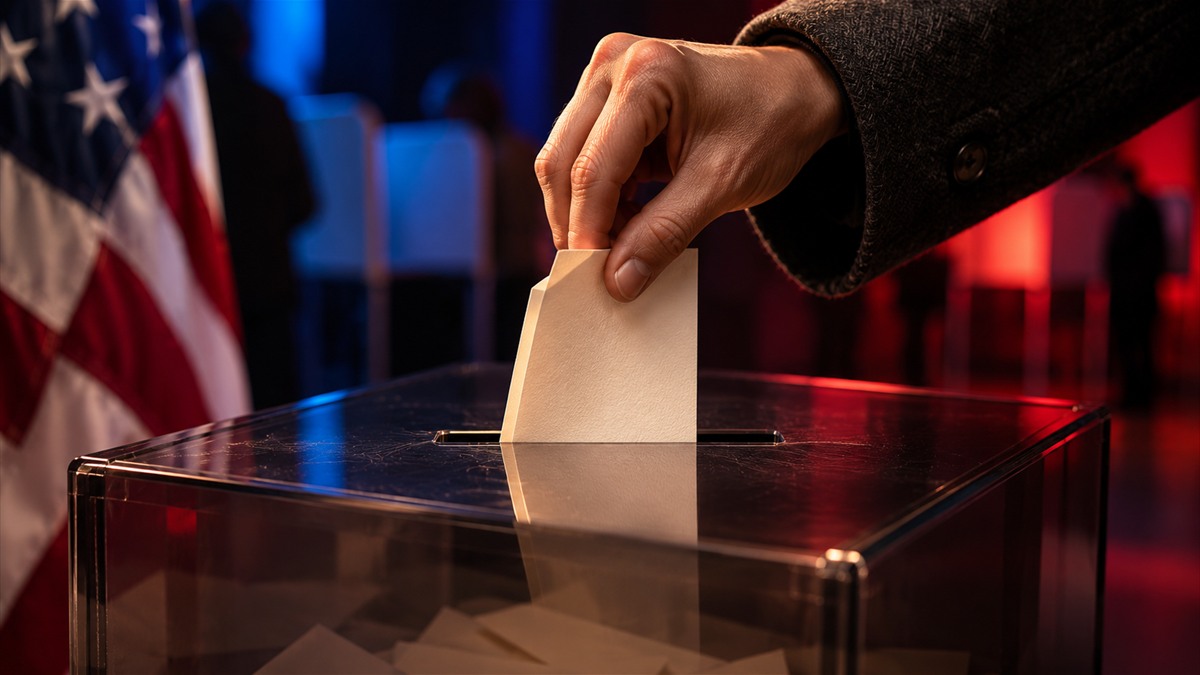
US midterm elections were held on November 3 (US local time). According to projections by several US media outlets on November 4, Democrats won majorities in the Senate and the House and won statewide races in traditionally Republican strongholds such as Ohio and Texas. According to Reuters, Democrats plan to introduce legislation on AI and data centers after taking control of Congress in January next year. The election result cut both ways for markets: on one hand, investors bet on a de-escalation of the US-Iran conflict and oil prices fell sharply; on the other, concerns that data center construction could be restricted triggered a sell-off in AI supply-chain stocks.
The US Labor Department reported on November 6 that nonfarm payrolls rose by 165,000 in October, well above the 65,000 expected in a Reuters poll; September's figure was revised up from 29,000 to 60,000, and August's from 133,000 to 186,000. The unemployment rate edged down to 4.1%, and average hourly earnings rose 0.4% month on month and 3.1% year on year. Federal Reserve officials remained hawkish: New York Fed President Williams said inflation is too high and must come back down to 2%, and San Francisco Fed President Daly said the Fed may still need to raise rates further even if the tech sell-off is painful. According to CME FedWatch, as of Friday afternoon New York time, the market-implied probability of a Fed rate increase of at least 25 basis points in December rose to nearly 80% after the payrolls release, from about 67% the previous day. At the same point, the 2-year Treasury yield rose 4.1 basis points to 4.52%, and the 10-year yield rose 1.6 basis points to 4.85%.
Foreign exchange: Bank of England raises rates for the first time in more than three years, and strong payrolls lift the dollar on Friday
On November 5, the Bank of England voted 8 to 1 to raise its benchmark rate by 25 basis points from 3.75% to 4%, with Monetary Policy Committee member Catherine Mann voting for a 50-basis-point increase. The bank said the conflict in the Middle East has entered its ninth month and energy prices have risen sharply, and it expects CPI inflation to climb from 3.5% in September to around 5% in the second quarter of 2027; it also said monetary policy is not on a pre-set path. Sterling rose to a seven-week high against the dollar that day; as of Friday afternoon New York time, it had fallen 0.71% to around 1.3355, slightly lower on the week. On November 3, the Reserve Bank of Australia voted 6 to 3 to raise its cash rate by 25 basis points to 4.85%, noting that higher fuel prices are feeding through to other goods and services.
After the election result, the dollar posted its biggest one-day drop in three weeks on November 4. Safe-haven demand rose during Thursday's US equity sell-off, and the yen strengthened. On Friday, payrolls data far above expectations sent the dollar higher: as of Friday afternoon New York time, the dollar index rose 0.77% to 102.26, recovering its midweek losses and finishing slightly higher on the week; EUR/USD fell 0.67% to around 1.1144; and USD/JPY rose to 158.43, with the yen down about 0.6% on the week.
Oil: Hopes of a US-Iran de-escalation build, with January Brent down about 13% on the week
On November 2, Iran reportedly said that mediators were discussing the proposal Iran put forward at the UN General Assembly in September, and US President Donald Trump said Iran wants to reach a deal. Brent crude fell 7.6% that day to $104.77 a barrel, and WTI fell 7.4% to $96.46, its biggest one-day drop since July 27. After the midterm results, markets expected the US-Iran conflict to cool, and Brent fell nearly another 9% on November 4. On November 5, Brent rebounded 3.9% to $98.29; the same day, a tanker exploded in the Gulf, and a Greek ship manager said one crew member was killed in a suspected missile attack, and continued attacks on shipping kept supporting oil prices.
On November 6, January Brent edged up 3 cents to $98.32 a barrel, and December WTI rose 31 cents to $90.83. On a like-for-like contract basis, Brent fell about 13% for the week and WTI fell about 12.8%.
The weekend brought both diplomatic efforts and fresh military moves. According to Reuters, citing Al Jazeera on November 7, Qatari Prime Minister Sheikh Mohammed bin Abdulrahman Al Thani said Qatar's mediation between the US and Iran is continuing and has made major progress. President Trump confirmed on November 6 that US forces had carried out minor strikes on an air defense site on Qeshm Island, the first since the midterms; Iranian state media said two missiles had hit the island. US Central Command said US forces on November 7 disabled a cargo ship in the Gulf of Oman that was trying to break the blockade of Iranian ports; the same day, it set up a new task force to stop advanced weapons, dual-use technology and sanctioned materials from moving across Iran's land borders and the Caspian Sea. In a CNN interview on November 8, Trump said it was highly unlikely that renewed fighting would be necessary if Iran signs a very strong agreement, but repeated that the US could strike Iran's bridges and power plants if the war resumes. According to Agence France-Presse, Iran's Revolutionary Guards said three tankers caught fire in the Strait of Hormuz on November 8; the UK Maritime Trade Operations separately reported that a tanker caught fire on November 7 in waters near Khasab, Oman, and whether the reports involve the same incident has not been confirmed.
Gold: Up about 4.6% on the week, back above $4,000
The dollar weakened after the election result, and spot gold rose about 3% intraday on November 4; falling oil prices also eased inflation concerns. On November 6, strong payrolls data lifted the dollar and Treasury yields, and gold dipped to around $4,033 at one point. According to New York closing quotes from Precious Metals International, spot gold was at $4,060.20 an ounce on Friday, up about 4.6% from the previous Friday; silver was at $51.89 an ounce, up about 5.8% on the week.
Equities: Stocks rise and then fall after the election, with the S&P 500 and Nasdaq down for a fourth straight week
On November 2, Nvidia turned from gains to losses and weighed on the broader market, with the S&P 500 down 0.5% and the Nasdaq down 1.1%. Apple reported results after the US market close on November 2 (early morning of the 3rd Beijing time): fiscal fourth-quarter revenue rose 12% to $114.5 billion, a record for the September quarter. The company warned, however, that rising memory costs will squeeze gross margin and guided to a gross margin of 45% to 46% for the December quarter, and its shares fell the next day.
On November 4, the midterm results cost President Trump's Republican Party full control of Washington, and US stocks rose broadly, with the Dow up a sharp 3.0% and the S&P 500 up 1.6%. On November 5, AI-related stocks were sold off globally, with South Korea's KOSPI down 5.3%; markets feared that a Democratic victory could prompt the government to suspend new data center construction, and Nvidia fell 9.3% while AMD plunged 17.3%. The S&P 500 fell 4.4% that day, its biggest one-day drop since April 2025, wiping out the previous day's gain, its largest in three months; the Nasdaq fell 5.5%, closing 11.9% below the record high set last month; and the Dow fell 3.4%.
AI stocks partly rebounded on November 6, with the Nasdaq up 1.1%. At that day's close, the S&P 500 stood at 7,376.86, down 2.7% for the week; the Nasdaq stood at 24,579.42, down 3.4%, with both declining for a fourth straight week; the Dow stood at 51,285.73, down 0.9%, its second straight weekly decline; and the Russell 2000 lost 2.1% for the week.
Cryptocurrencies: Bitcoin briefly tops $81,000 after the election, then gives back its gains
After the midterm results, a wave of short covering pushed Bitcoin above $81,000 at one point on November 4; according to CoinGlass, about $378 million in short positions were liquidated within one hour. On November 5, the sell-off in AI and chip stocks spilled over into crypto markets, with Bitcoin falling below $76,000 and Ethereum down more than 5%. On November 6, Bitcoin briefly dropped below $75,000. For the week, Bitcoin slipped from around $77,855 to around $75,967.
This Week's Watchlist (Beijing Time)
| Date | Event |
|---|---|
| Monday, November 9, 09:30 | China's National Bureau of Statistics releases October CPI and PPI |
| Tuesday, November 10, 21:30 | US October CPI |
| Wednesday, November 11 (US local time) | Veterans Day in the US; the Securities Industry and Financial Markets Association recommends a full-day closure of the bond market, while US equities trade as normal |
| Thursday, November 12, 15:00 | UK third-quarter GDP, preliminary estimate |
| Friday, November 13, 21:30 | US October PPI |
Risk notice: This material is for reference only and does not constitute investment advice. Financial markets involve risk, and past performance does not indicate future results.
Disclaimer
This content is for market information and commentary only and does not constitute investment advice, an offer or a solicitation. Financial markets involve risk, and leveraged products may result in the loss of all or part of your capital. Investors should make independent decisions based on their own financial situation, investment objectives and risk tolerance, and bear the associated risks.